A car comes with paperwork nobody can find: who serviced it, when, and for how much. GarageBit put the marketplace, the service book and the workshop in one place, so the history travels with the car.
The idea
GarageBit is a Greek platform with two sides. Drivers get one app to search for a car, sell their own, find a garage nearby and keep their vehicle’s history. Workshops get a CRM that records every visit, and each record lands in the driver’s app as a page of the car’s digital service book.
noloop designed and built all of it: the app for iOS, Android and the web from one codebase, the workshop CRM, the admin panel, the Laravel API behind them and the automation around the marketplace.
A car's whole life, in one app
From the first search to the next service, the driver never leaves the app.
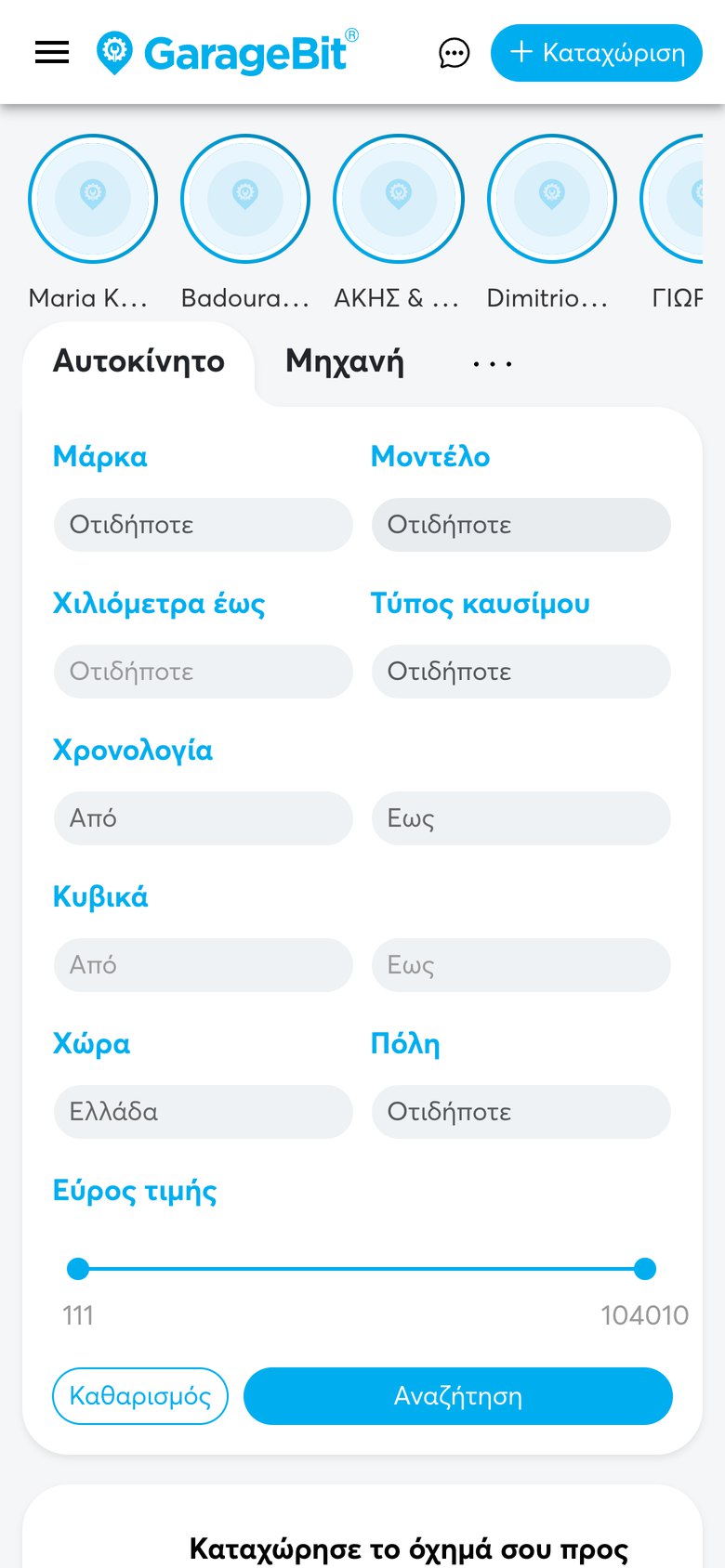
Search with real filters
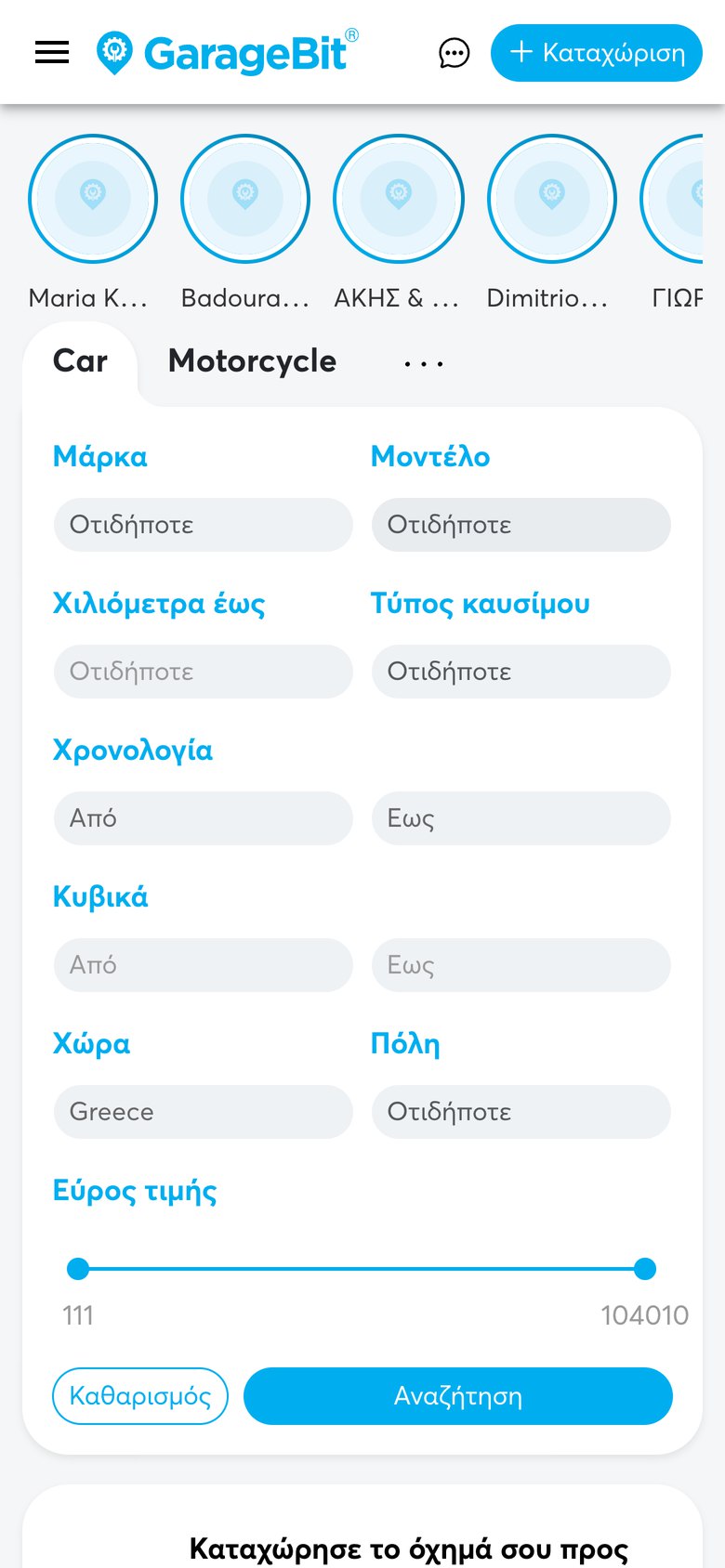
Make, model, mileage, fuel, year, engine size, price and location, plus stories from sellers along the top of the screen.
Listings that read at a glance
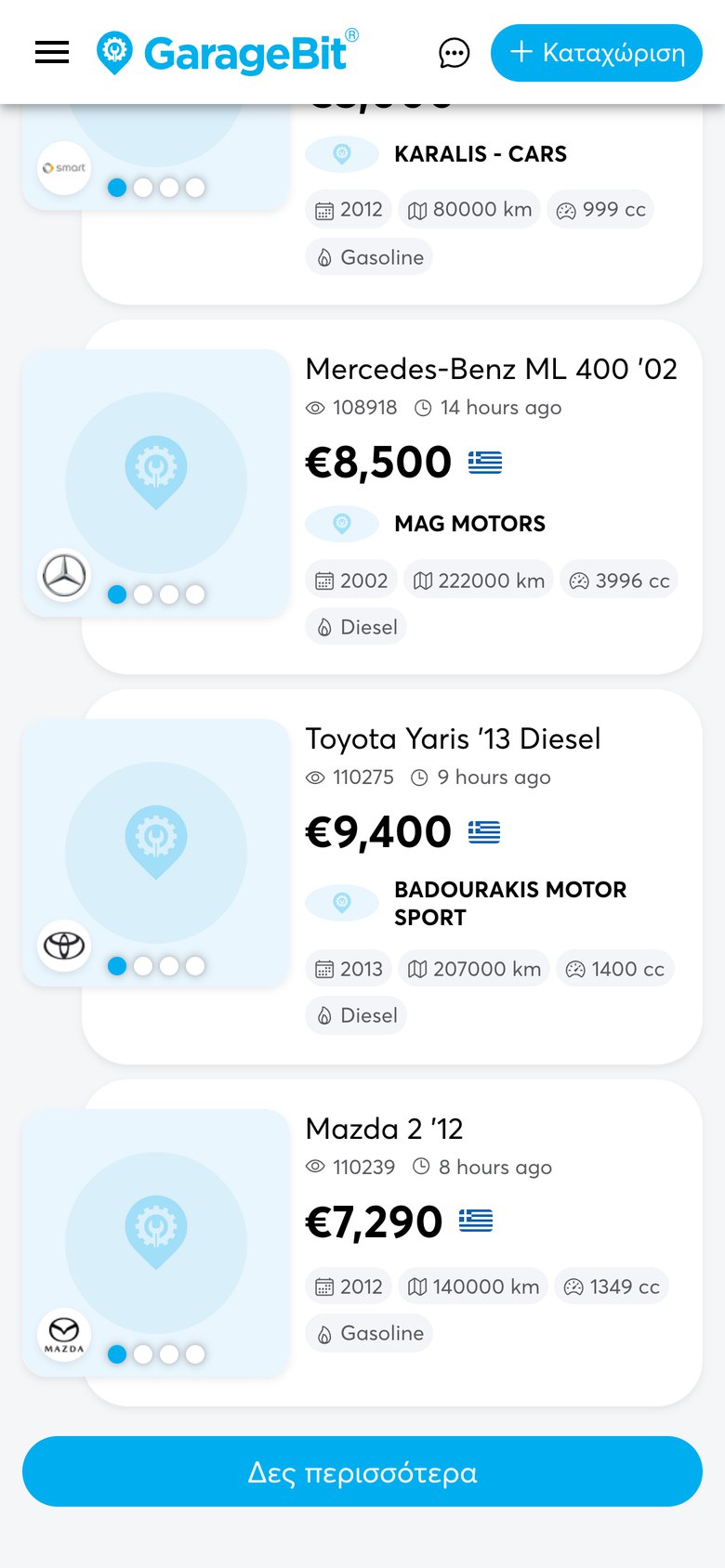
Every listing shows the price, the seller, the year, the mileage and the engine, with a photo gallery and the seller’s logo.
Talk to the seller
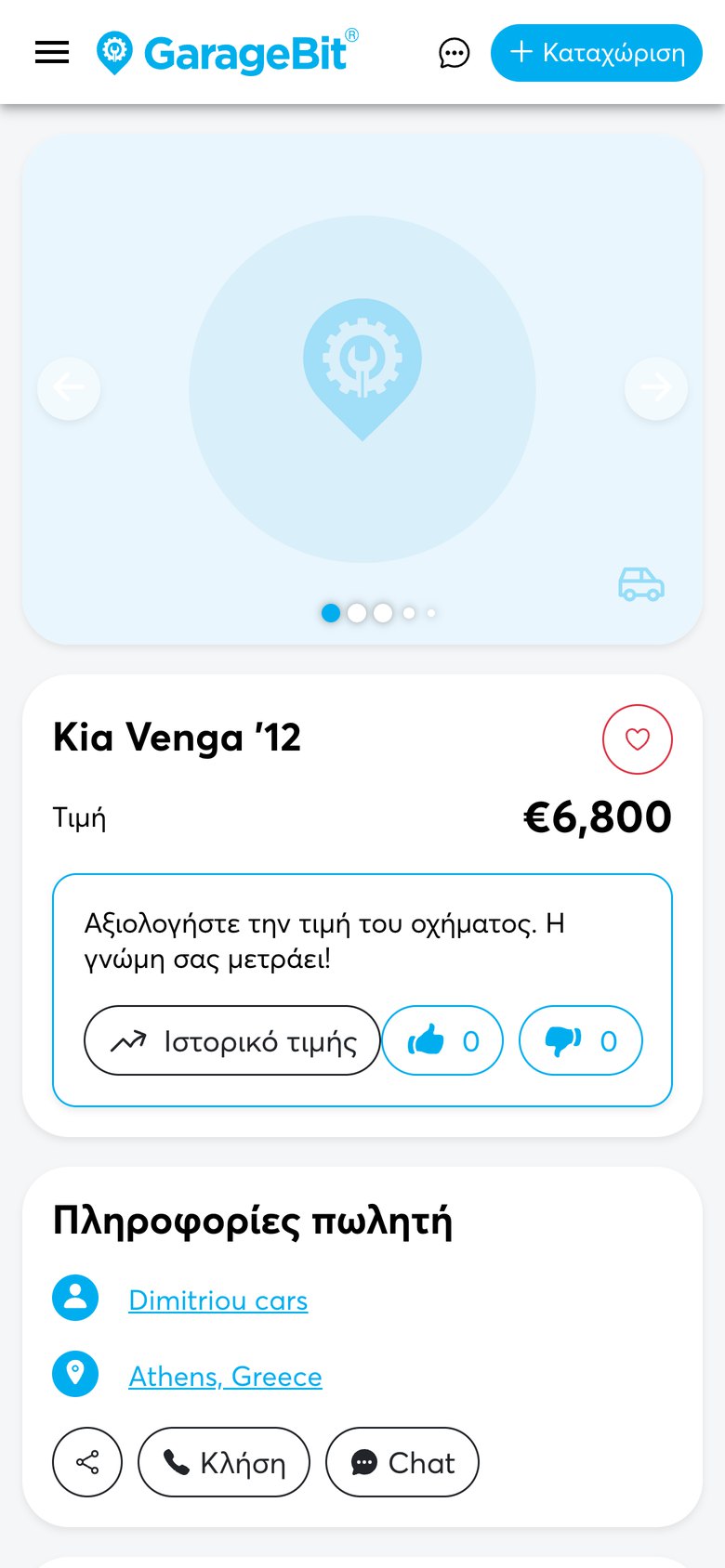
A listing has price history and reactions, a call button and a real-time chat with the seller, plus comments under the car.
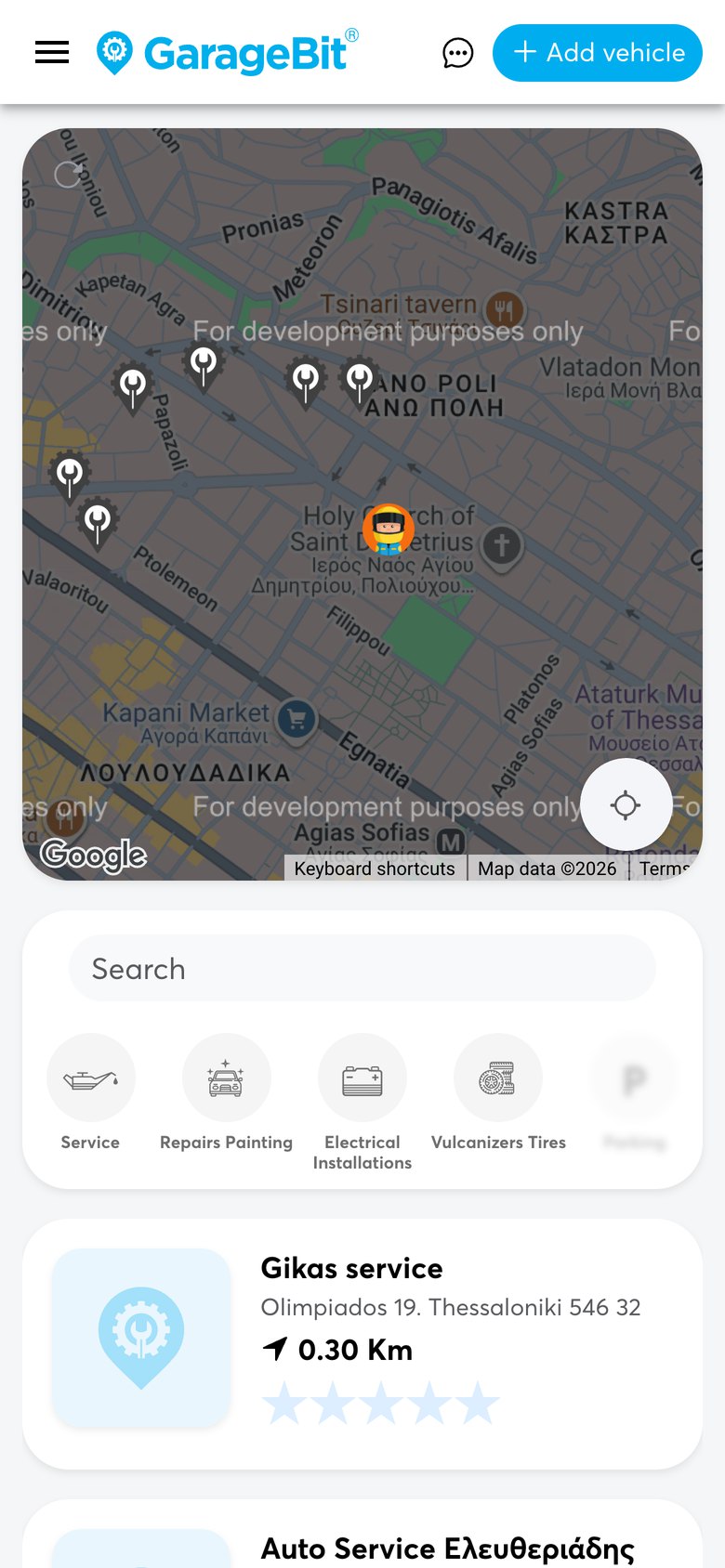
Find a garage nearby
A map of workshops by category (service, tyres, electrical, body shop) with clustering, distance and directions.
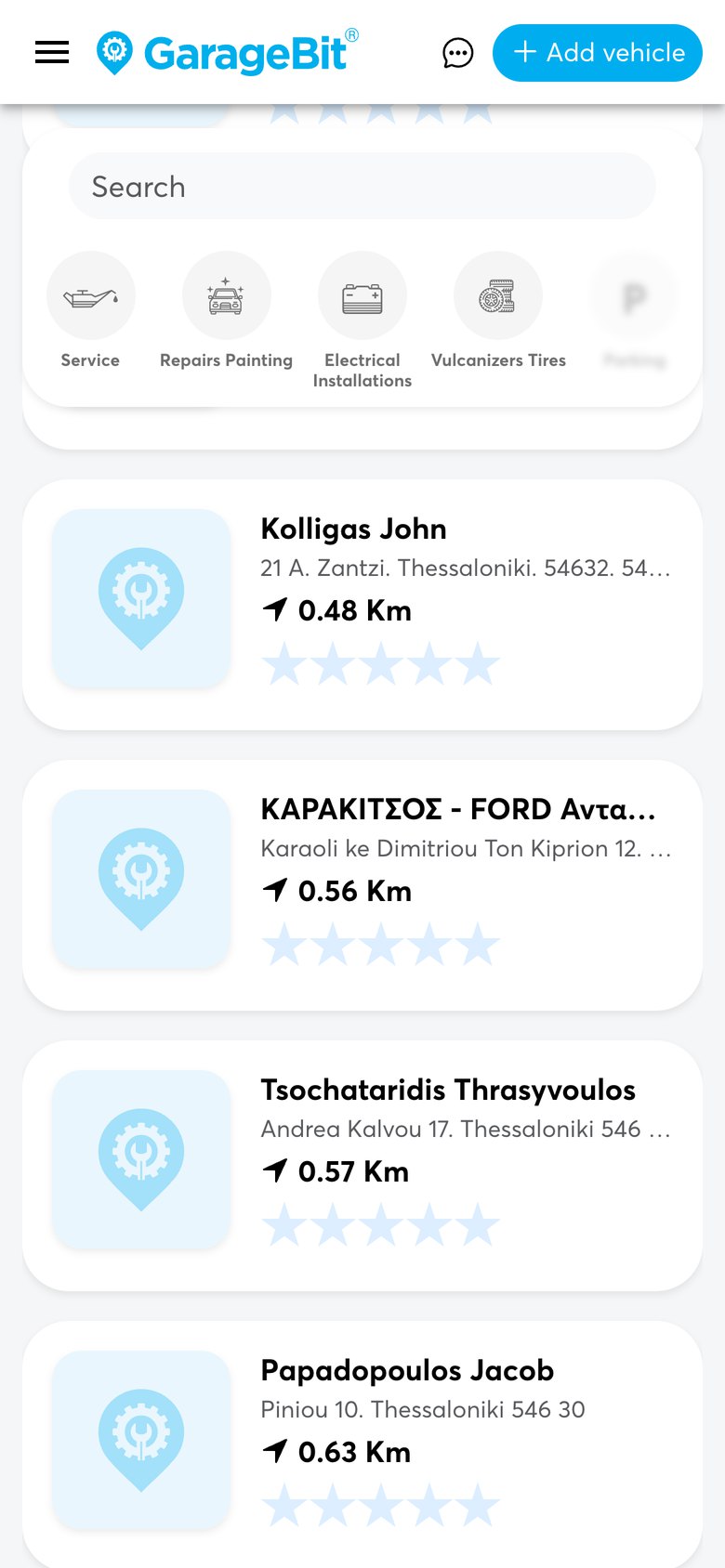
Choose by reviews
Reviews can only come from a real visit, because each one is tied to a service record from that workshop.
GarageBit in two minutes
GarageBit’s own presentation film, in Greek.

A service book that writes itself
The CRM starts from the licence plate. The workshop finds the car, enters the mileage, ticks the repairs and parts, assigns the mechanics and adds photos. Save, and the record appears in the owner’s app.
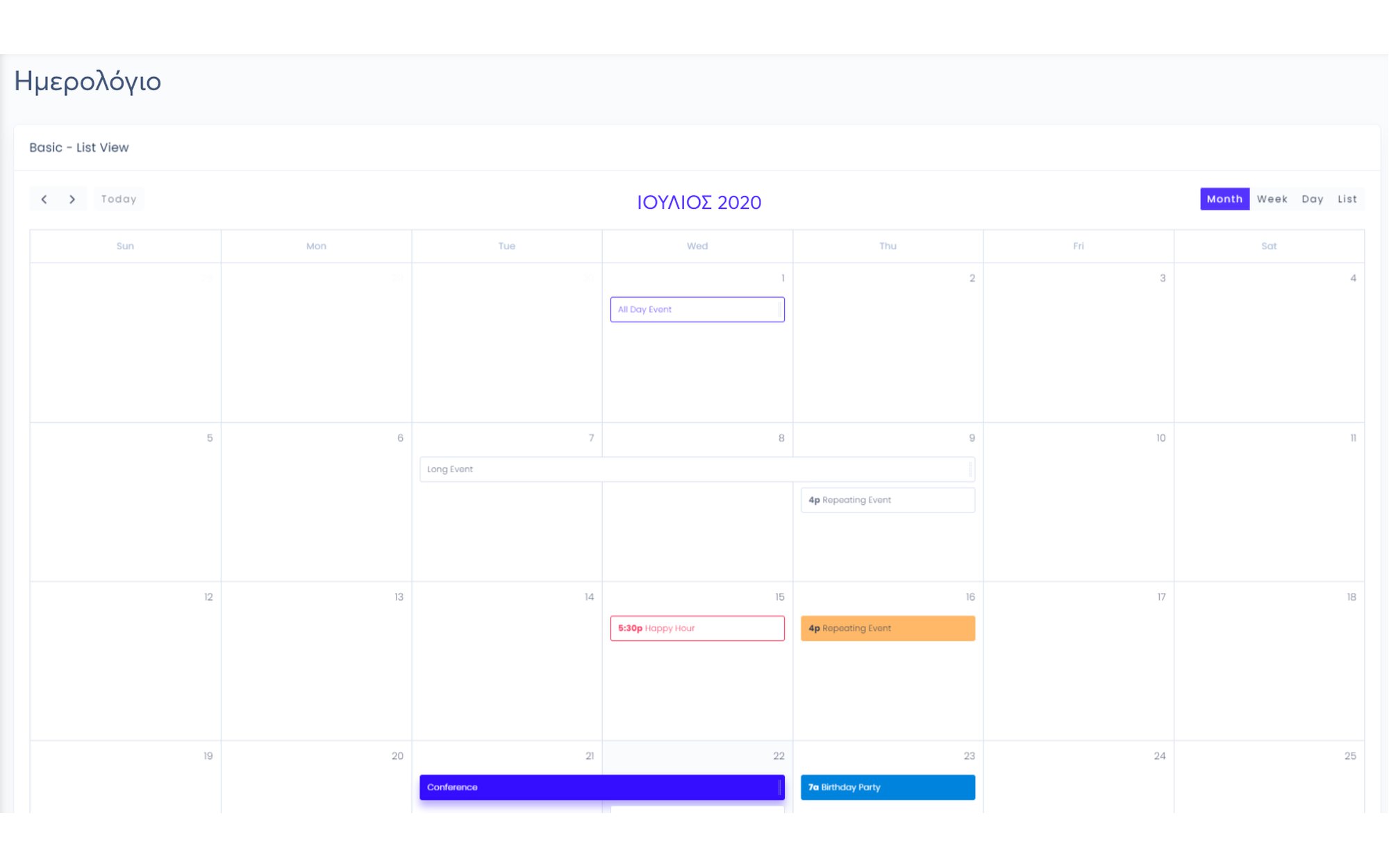
Around it sit the clients and their vehicles, a calendar for appointments, offers pushed to app users, staff accounts, reviews and the workshop’s public profile.
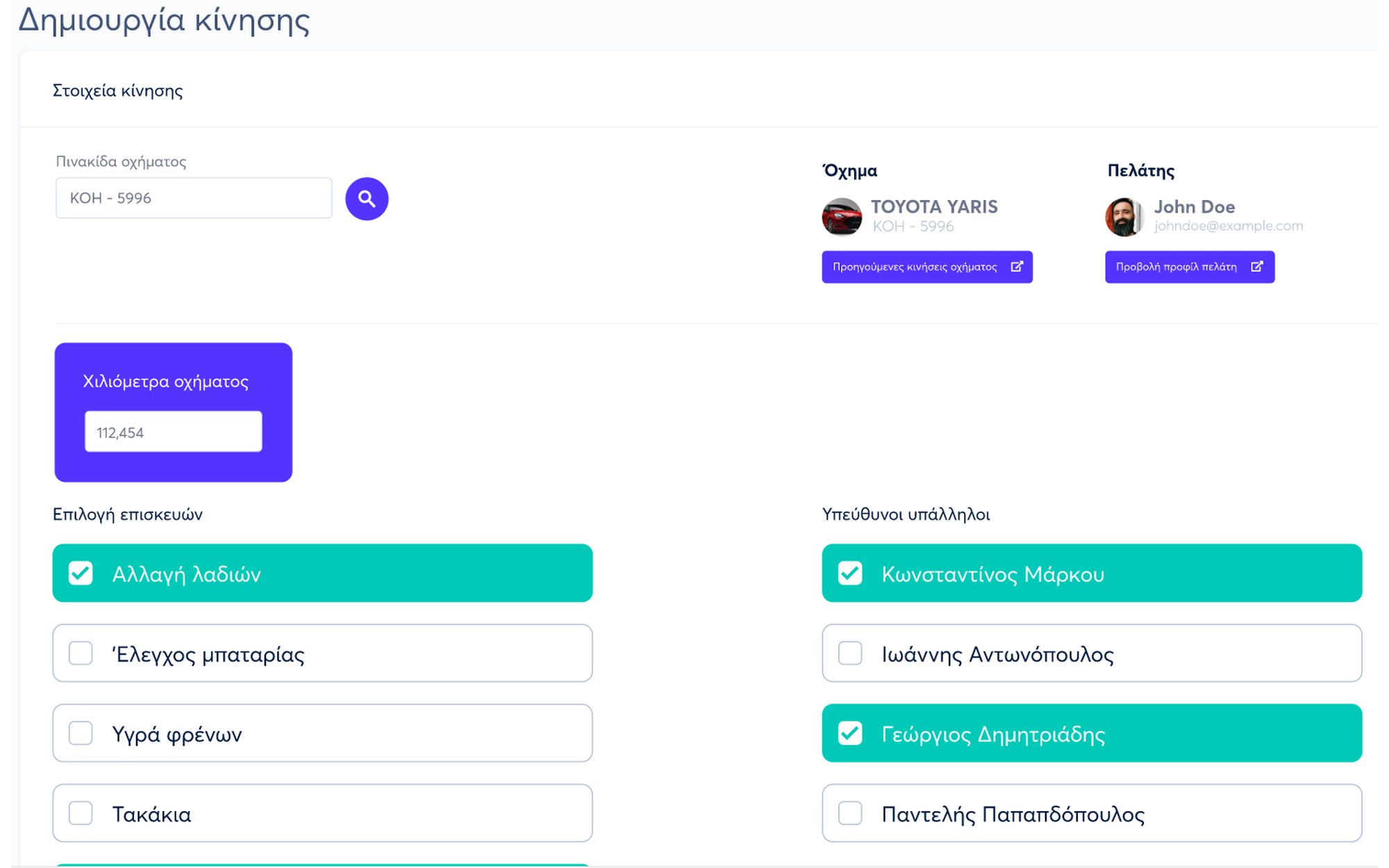
The workshop’s day, organised
- Appointments in a day, week or month view, and the client gets a notification for each one.
- Booking requests from the app arrive in the CRM as notifications.
- One login can manage more than one company.
Versions in the catalogue
41k
41,023 versions of 313 makes, so every listing and service record points to the exact car.
Under the hood
- One codebase, three platforms
- Ionic and Angular with Capacitor ship the same app to iOS, Android and the web, with server-side rendering and prerendered pages so listings are found by search engines.
- Real time where it matters
- Chat runs on Pusher and Laravel Echo; new messages, service records and appointments reach the phone as Firebase push notifications.
- Dealers list in bulk
- Professional sellers can import their whole stock from XML, CSV or JSON instead of adding cars one by one.
- Listings that become videos
- A Node.js service with Puppeteer and FFCreator turns a listing into a 1080×1920 vertical video, ready for reels and stories, straight from the admin panel.
- Plates read from a photo
- The backend reads licence plates from photos through the Plate Recognizer API.
- Built to sell
- Subscriptions for workshops and sellers through Stripe and PayPal, Facebook catalog feeds and the Conversions API for advertising.
More of the app
The app runs in Greek and English, signs people in with email, Apple, Google or Facebook, and is available on Google Play.
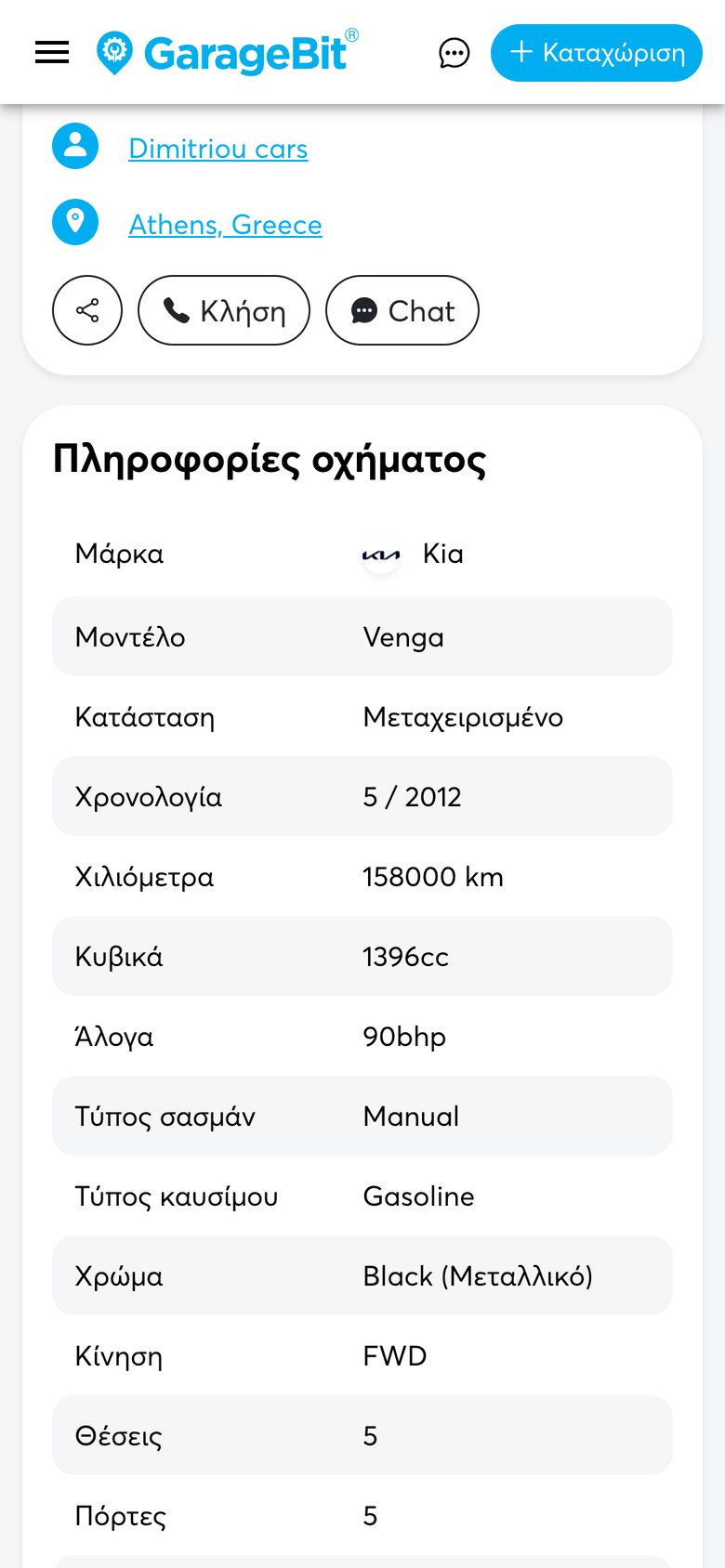
Vehicle details
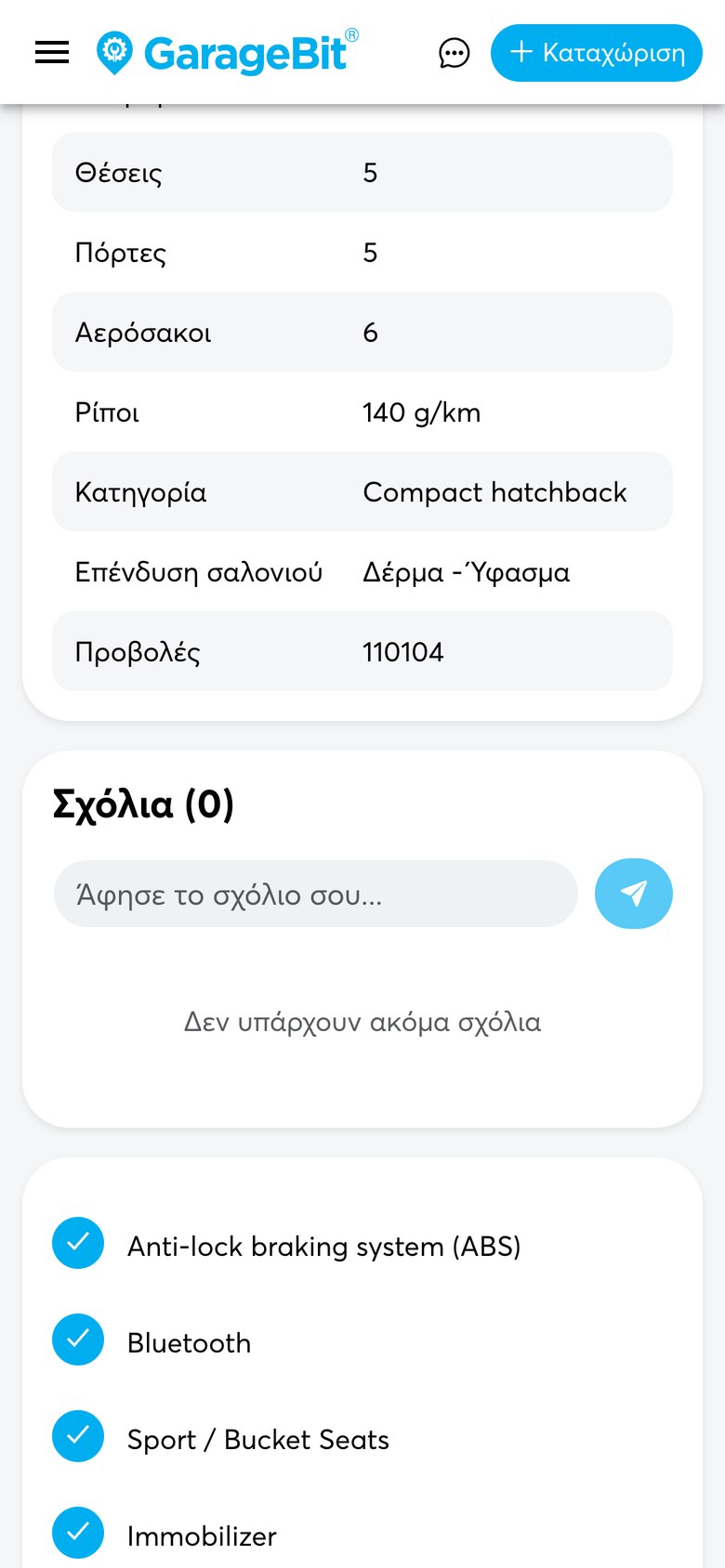
Equipment and comments
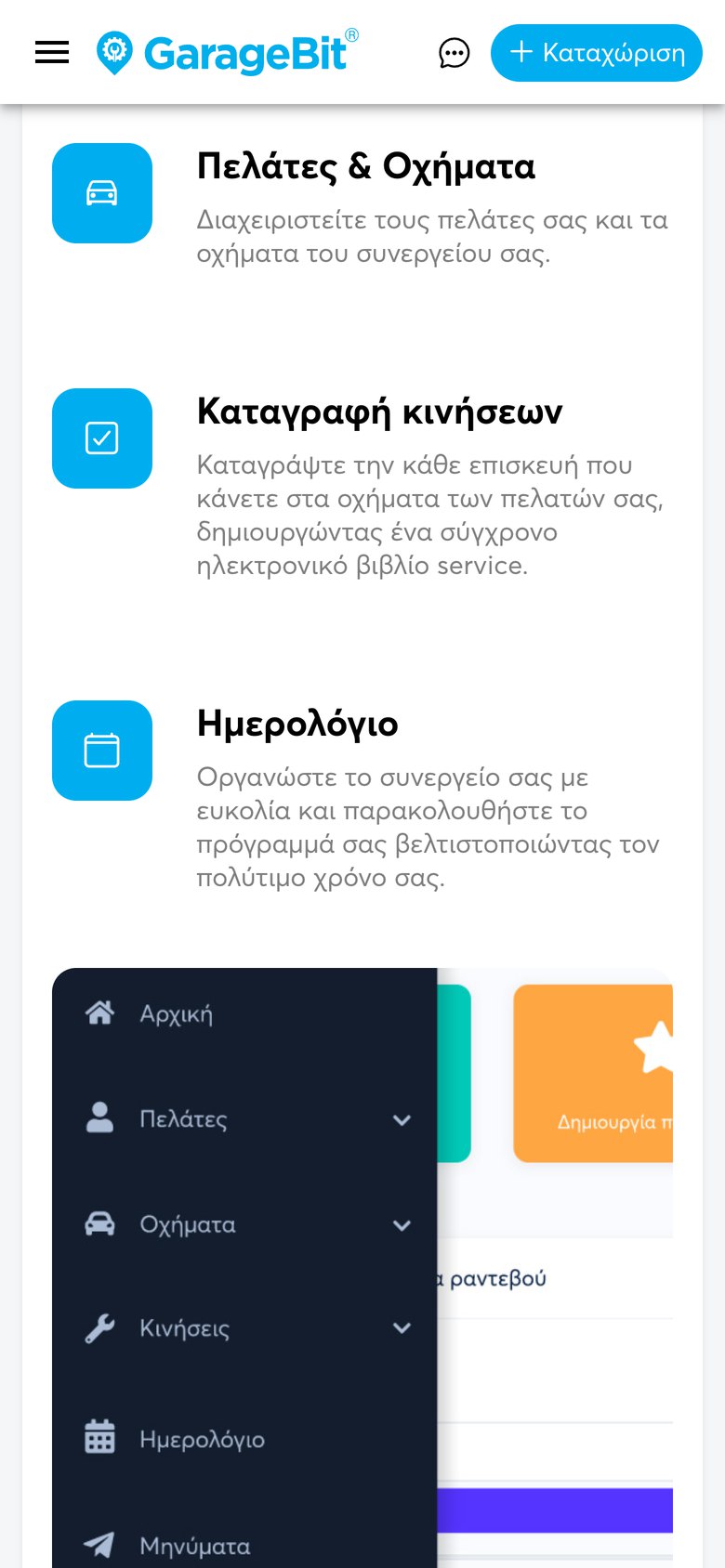
CRM for workshops
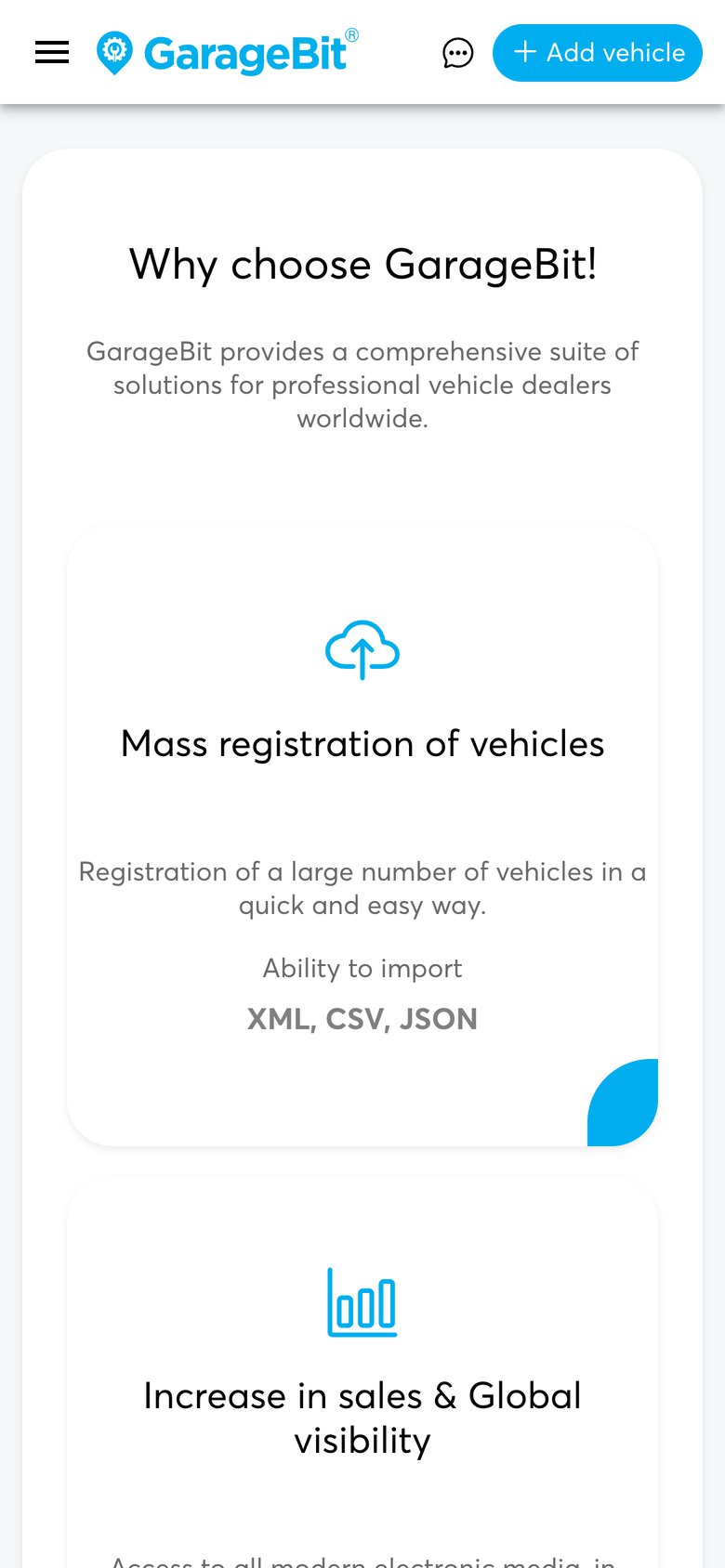
For professional sellers
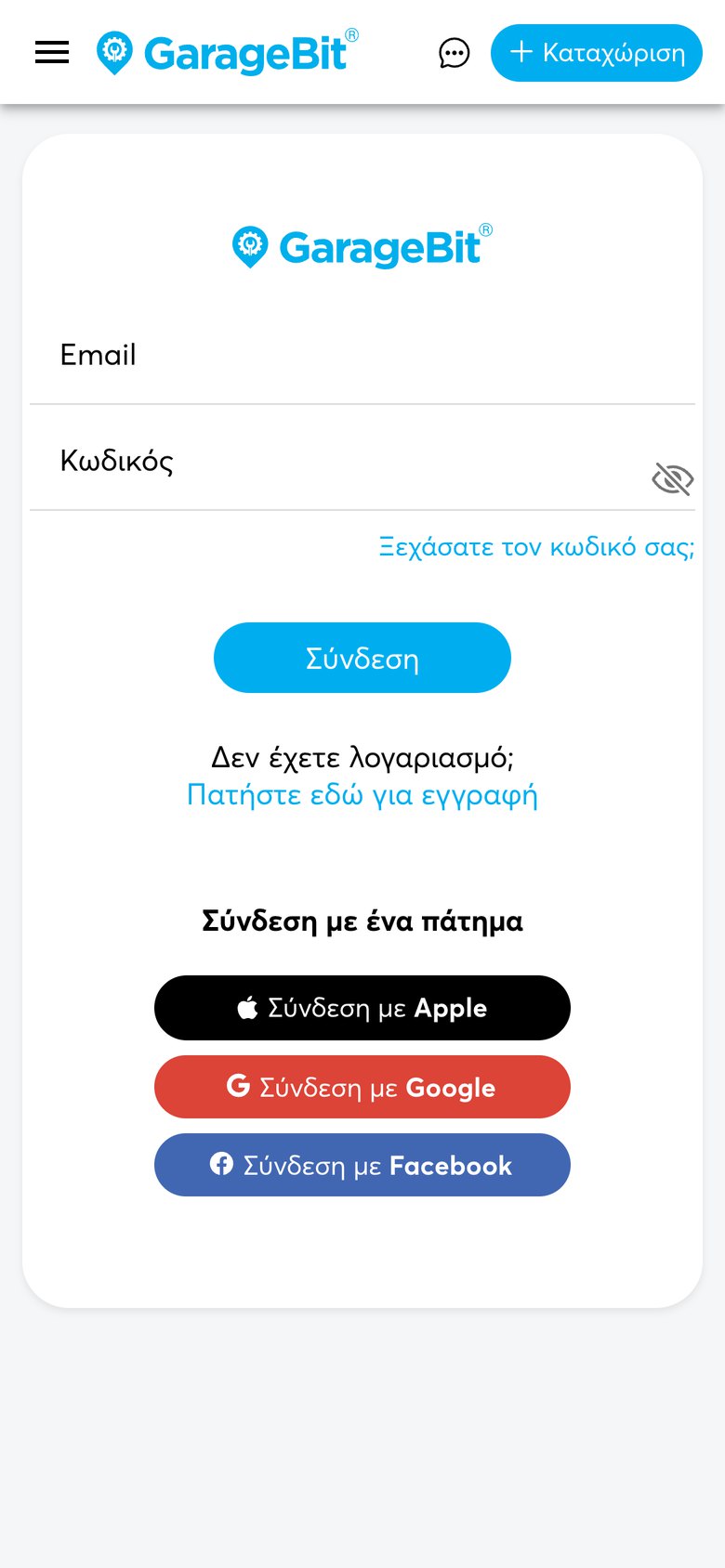
Sign in your way
Greek and English
What we built
- A marketplace and service-book app for iOS, Android and the web, from one codebase
- A CRM for workshops: clients, vehicles, service records, calendar, offers and staff
- An admin panel for users, companies, listings, the vehicle catalogue, subscriptions and push campaigns
- A Laravel API with real-time chat, push notifications and subscription payments
- Automation for importing dealer stock and generating vertical videos of listings