Invoices arrive on paper, by email, as PDFs and as phone photos, and at the end of the month they go to the accountant through a chaotic chat thread. Stilta turns that pile into tidy monthly folders, so month-end takes seconds, not hours.
The idea
The problem is not accounting. It is getting the paperwork to the accountant. Lost receipts mean lost VAT deductions, missed deadlines mean fines, and the accountant bills for the time spent tidying up.
Stilta is built for Greek small businesses and freelancers: a café, a garage, an e-shop. The owner photographs or uploads anything, the AI reads each document, and every document lands in the right month for the right business. noloop designed and is building the whole product, from the app to the API, the AI pipeline and the billing.
From a photo to a folder
AI proposes, a person decides. Every step keeps the owner in control.
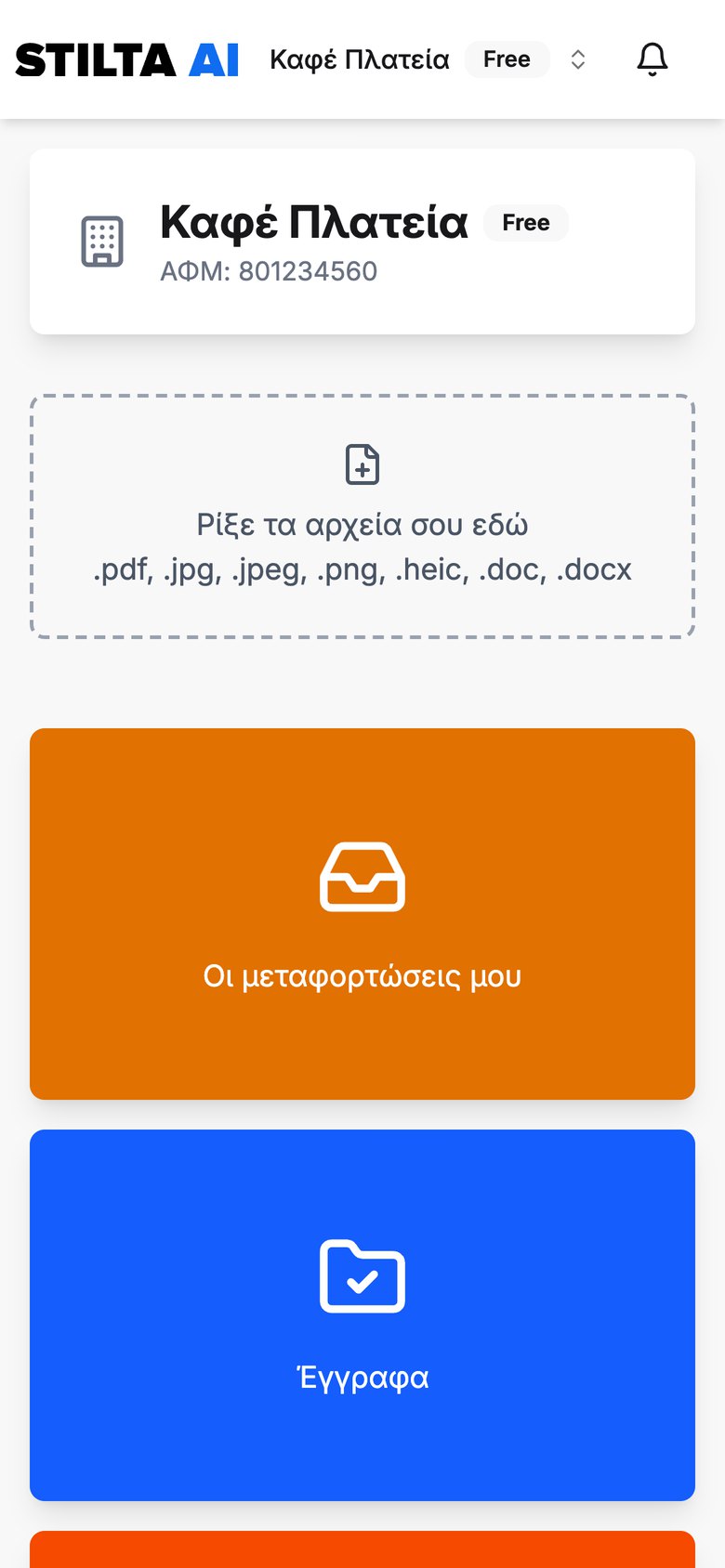
Drop anything in
Photos, PDFs, spreadsheets or Word files, one or many at a time. Nothing is ever rejected; iPhone photos are converted on the phone before they upload.
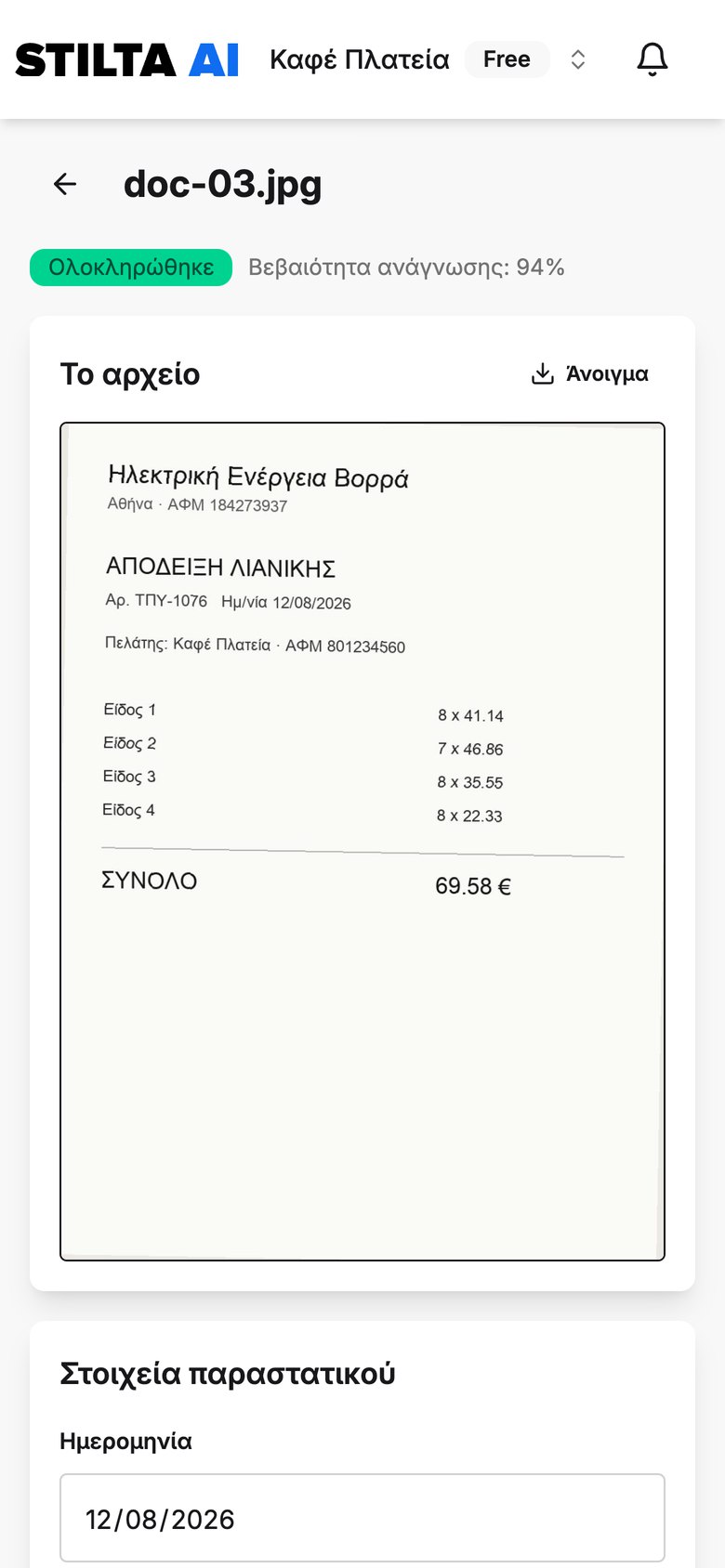
AI reads it
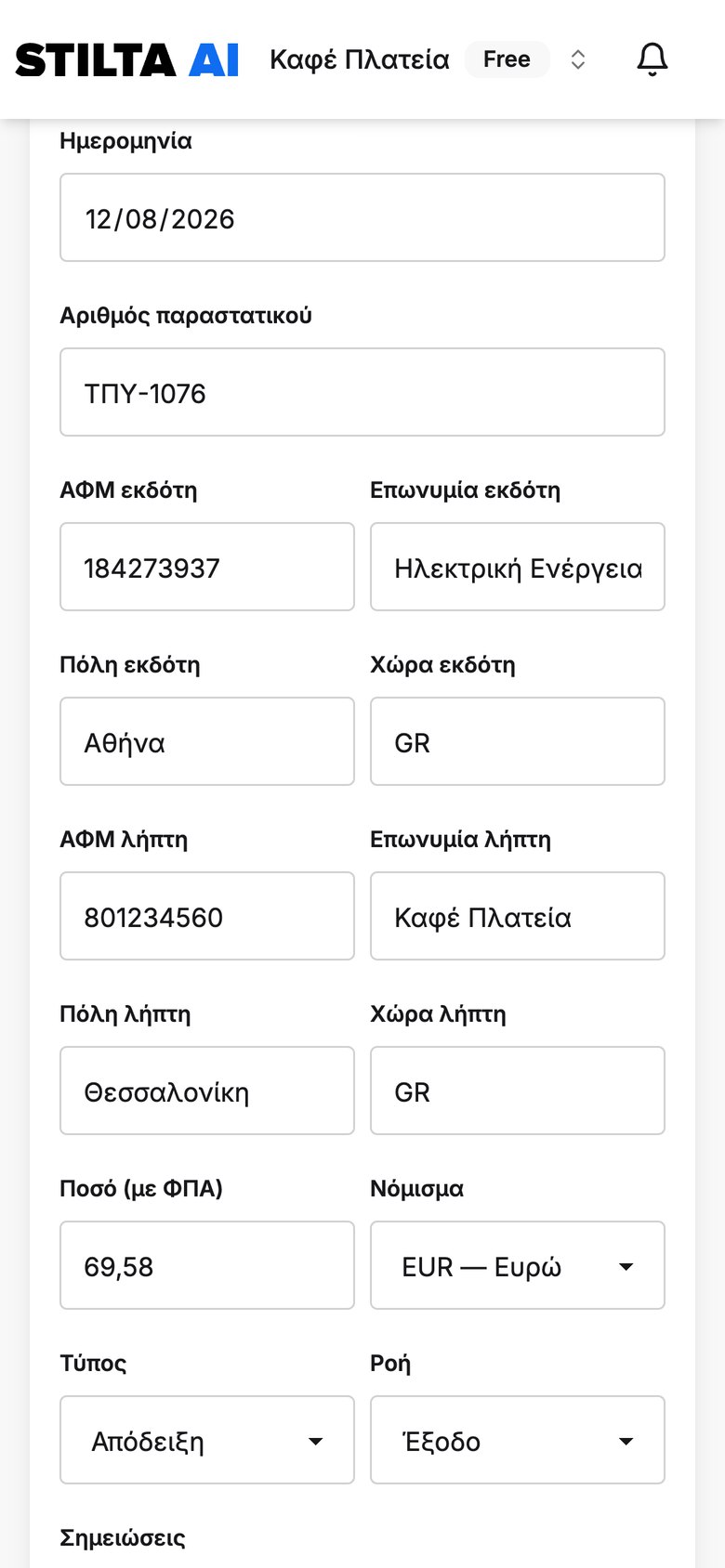
Date, number, supplier and customer with their tax numbers, total and type are read straight from the file, each with its own confidence score. Tax numbers are checked, and income or expense is worked out from the business’s own number, not guessed.
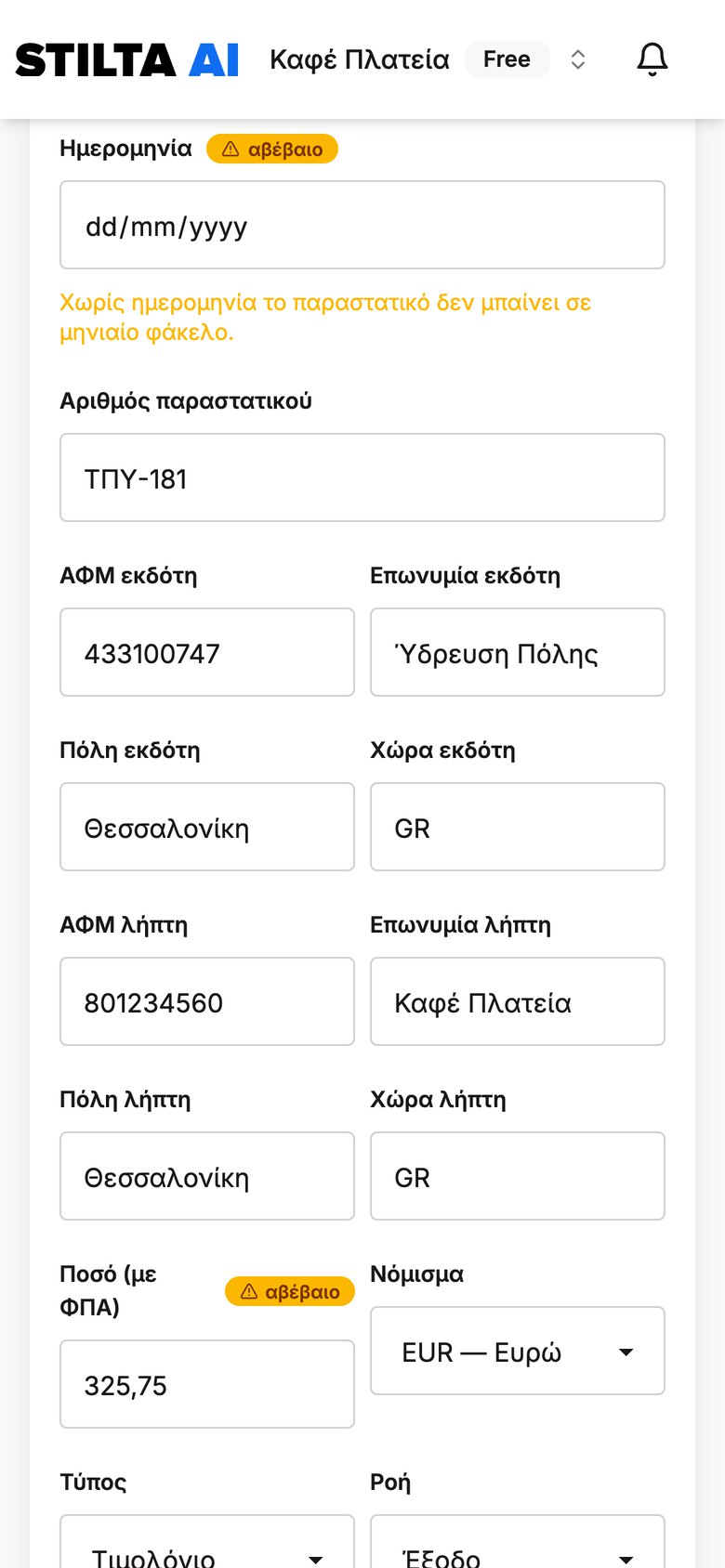
It says when it is not sure
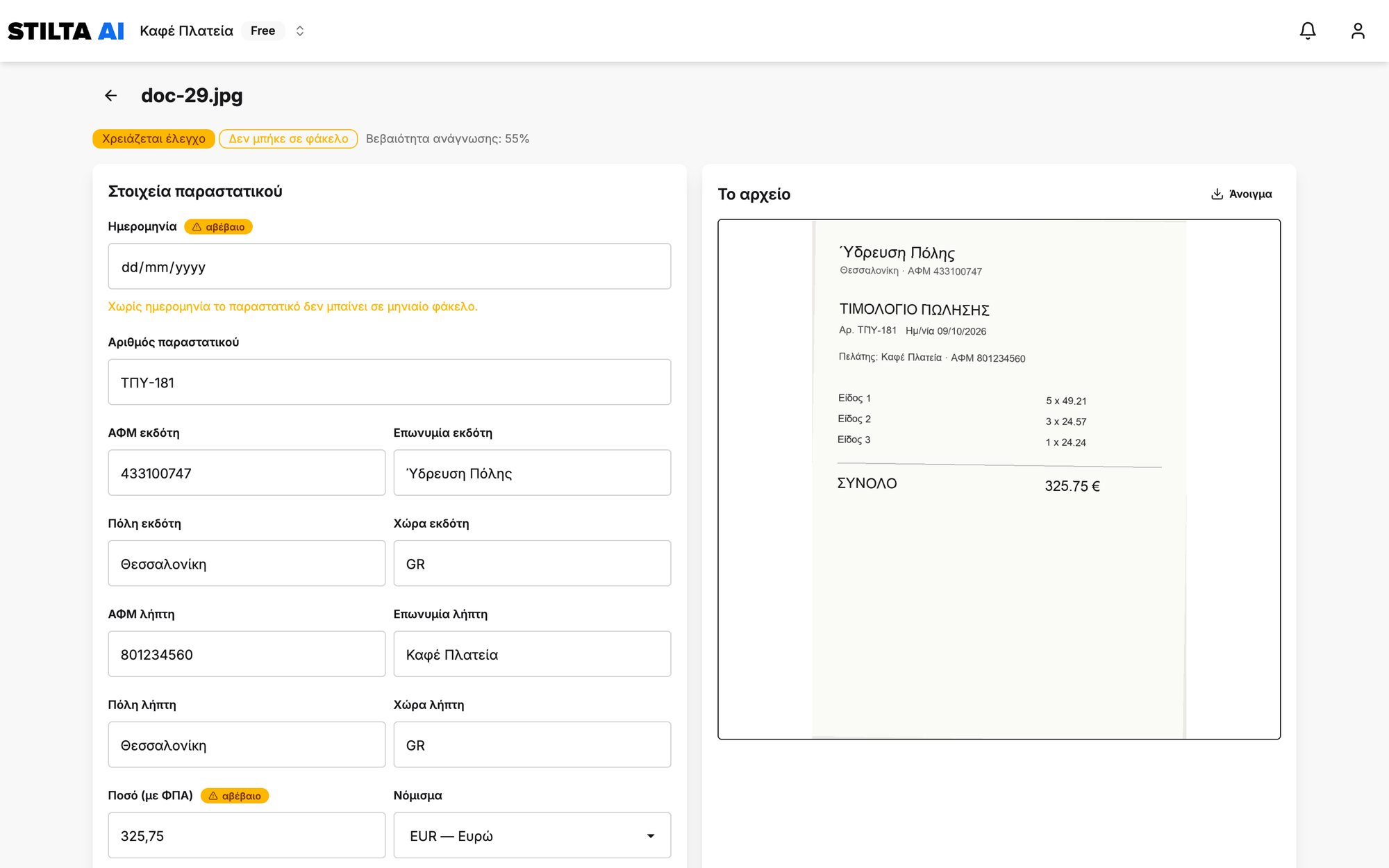
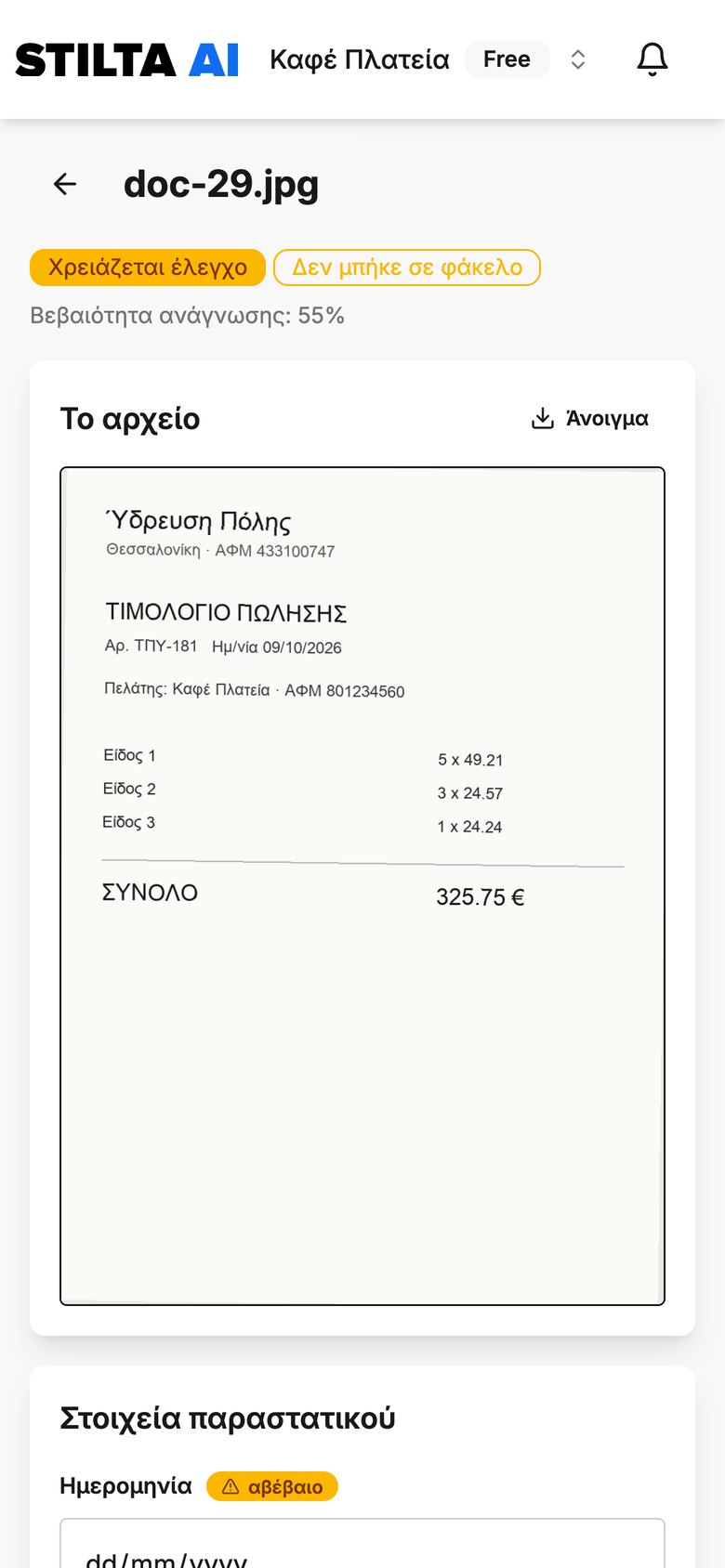
A field it could not read with confidence is marked for checking instead of being filled in with a guess, and every field stays editable.
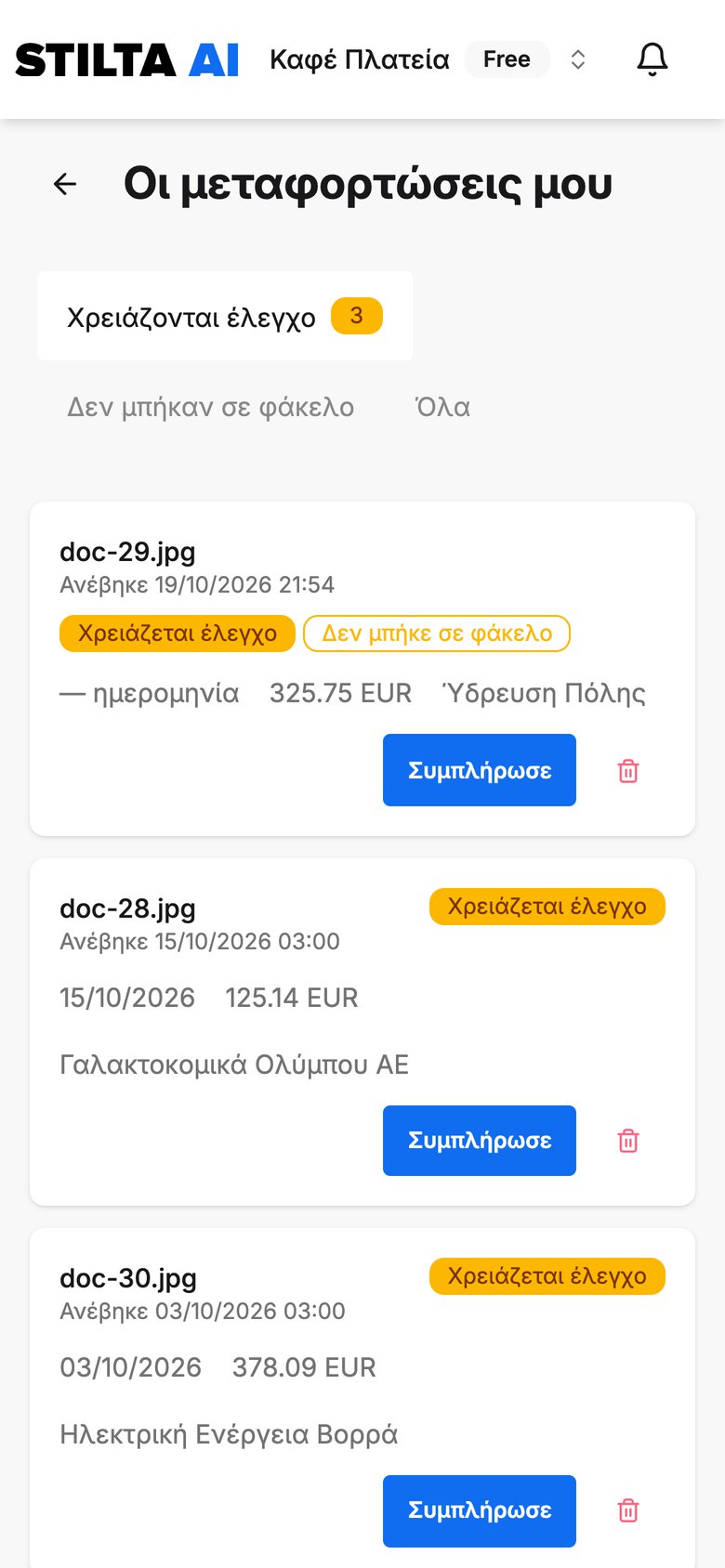
Nothing gets lost
“My uploads” collects whatever needs a look: documents to review, files without a date that could not be filed, and anything that failed, with a retry.
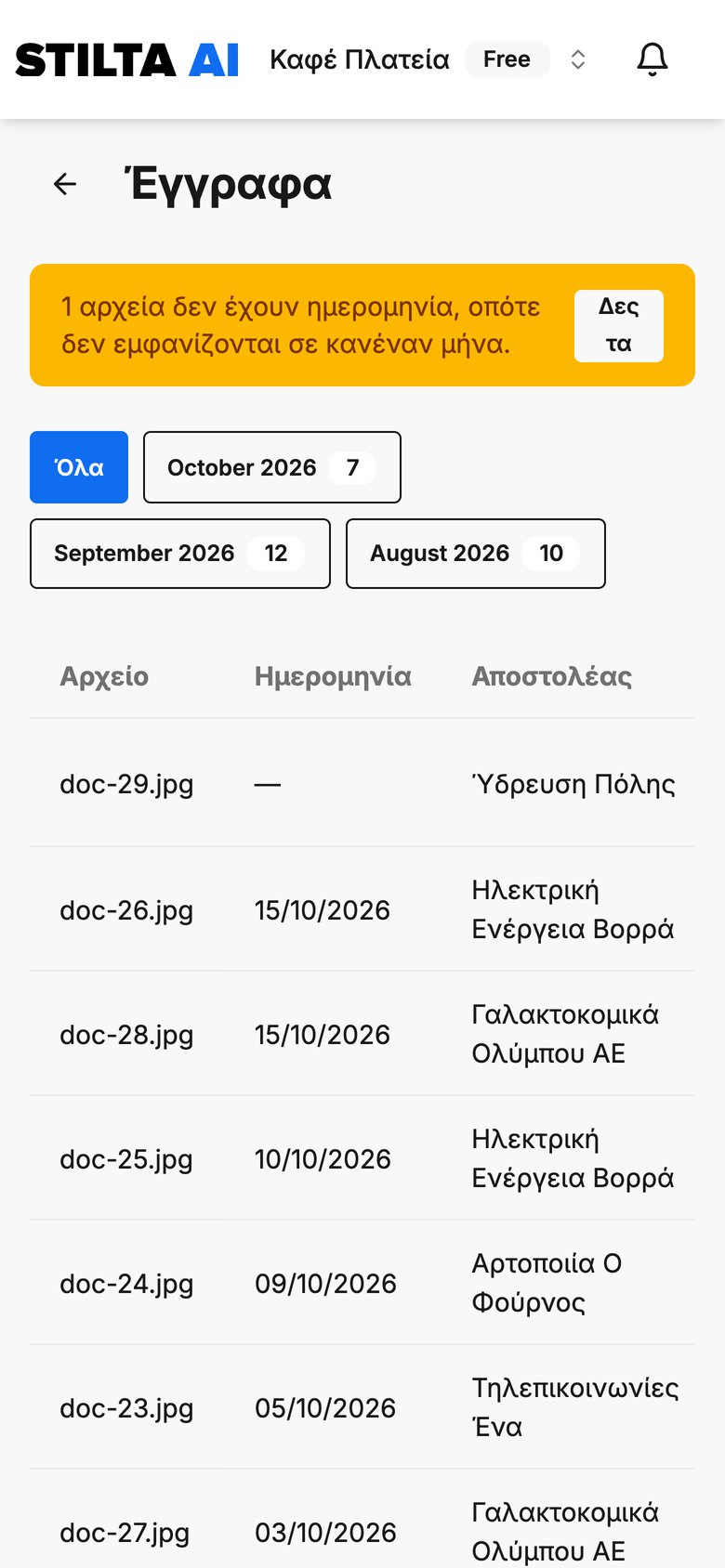
Monthly folders
Documents file themselves by month, with filters for type, income or expense, status and a search, ready for the hand-over to the accountant.
Check it side by side
On a bigger screen the form and the original sit next to each other, so checking a reading takes a glance. A document can be read again with one click.
The month-end Stilta aims for
30sec
The goal the product is designed around: closing the month in 30 seconds instead of three hours.
Under the hood
- No OCR step
- PDFs and photos go to the AI as they are and come back as structured data that must match a strict schema, with nulls allowed instead of invented values.
- AI behind one switch
- The AI provider sits behind its own interface, so changing it is one setting and one driver, not a rewrite.
- Built to retry
- Reading runs in the background with retries, and files the AI cannot read, such as spreadsheets, go straight to review instead of failing silently.
- One account, many businesses
- An owner switches between businesses like projects in a console. Each has its own tax details, team, files and plan.
- Teams with roles
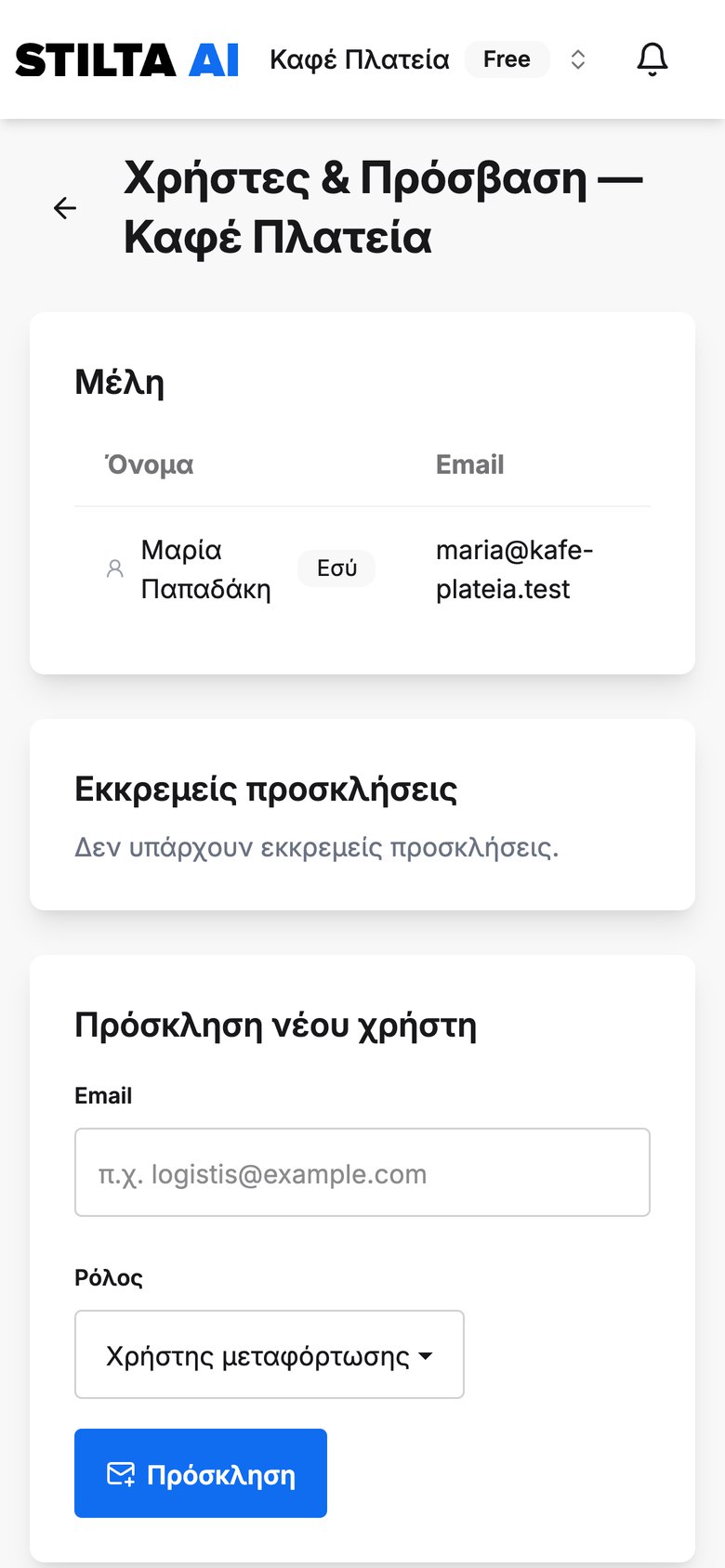
- Admins invite people by email with a role and a seven-day link; uploaders can add documents without seeing the rest.
- Private by default
- Files are stored privately per business and served only through authorised routes, with soft deletes and per-endpoint rate limits.
More of the app
Greek first, on the phone first: the app is built for the owner who snaps a receipt at the counter, and installs on iOS and Android through Capacitor.
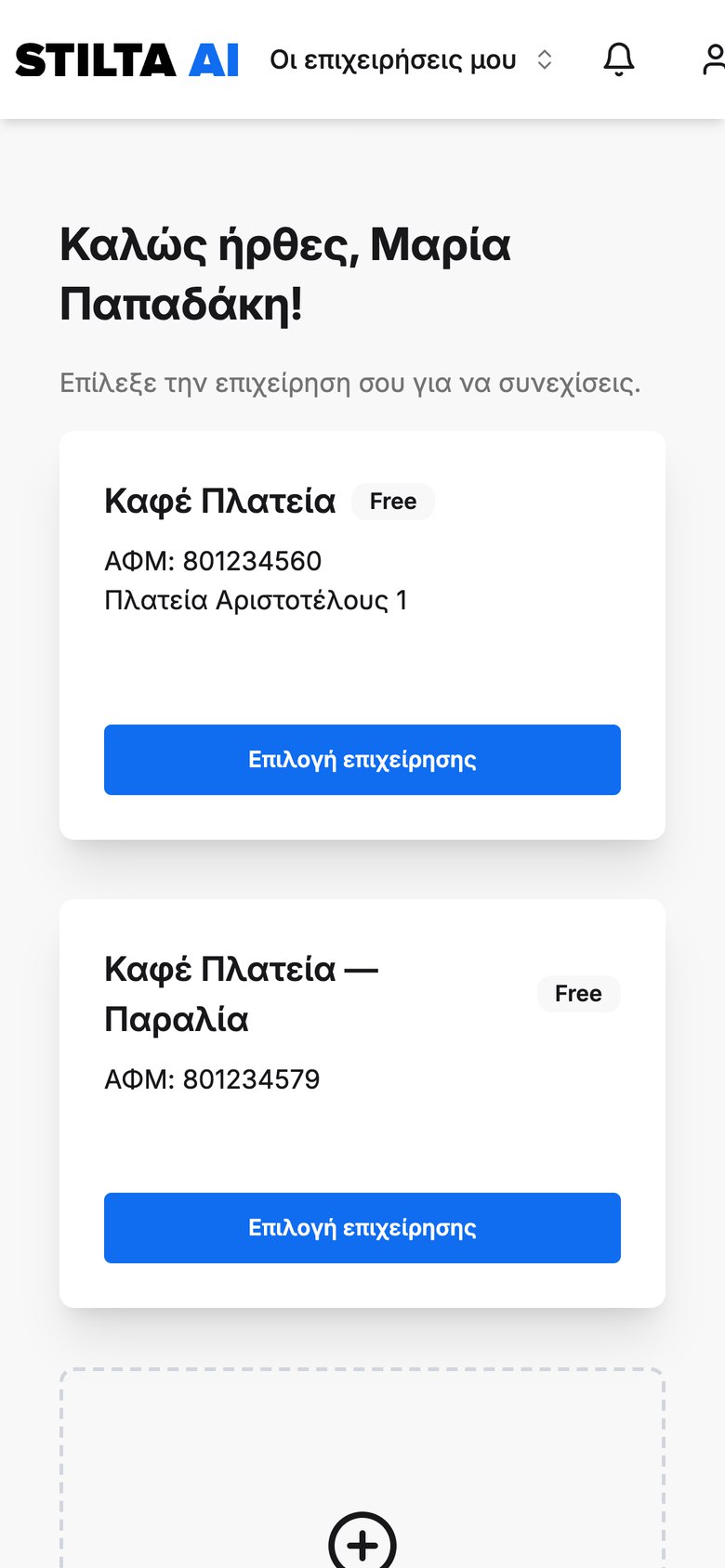
Your businesses
Every field, editable
Needs a look
Team & access
Plan & usage
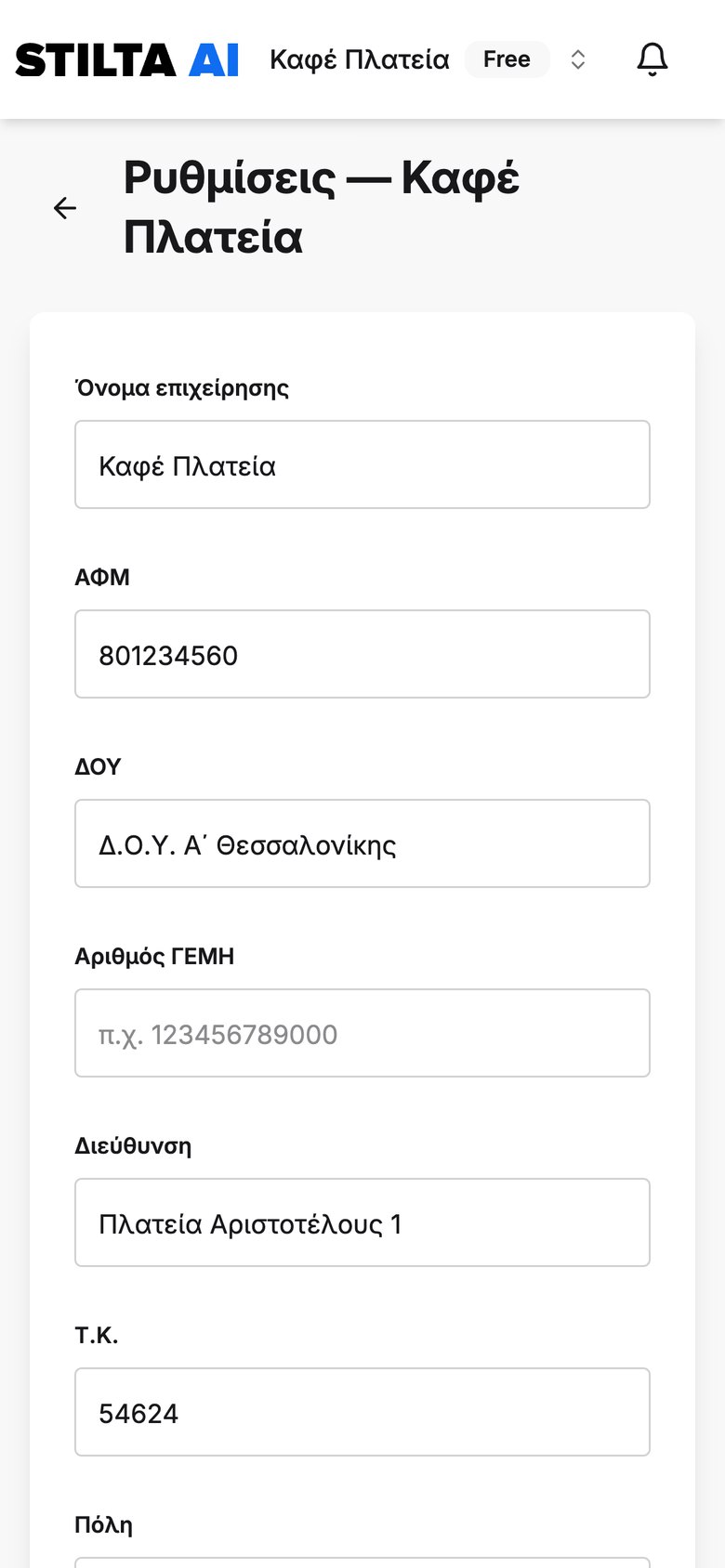
Business details
What we are building
- A mobile-first app for uploading, checking and filing invoices and receipts
- An AI pipeline that reads documents, scores each field and asks for review when unsure
- Monthly folders per business, with filters, search and a safety net for unfiled documents
- Multiple businesses per account, team roles and email invitations
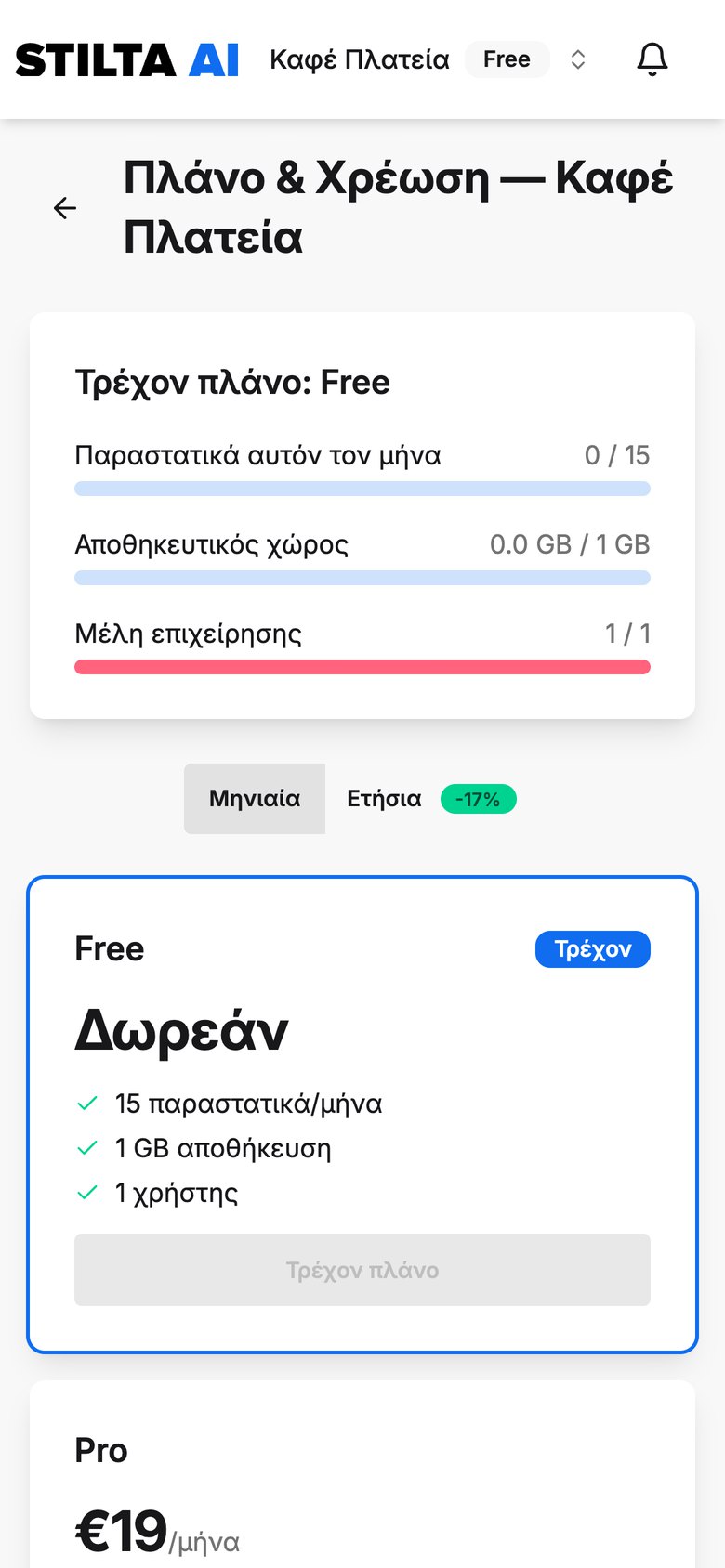
- Plans, usage limits and subscription billing
- One-tap delivery to the accountant and native apps, next on the roadmap